Dharmendra Pradhan Biography: Early Life, Family Background, Education, Political Journey and Career
Who is Dharmendra Pradhan? Explore his early life, family background, education, political journey, rise in BJP, achievements, controversies, and role as India's Education Minister.
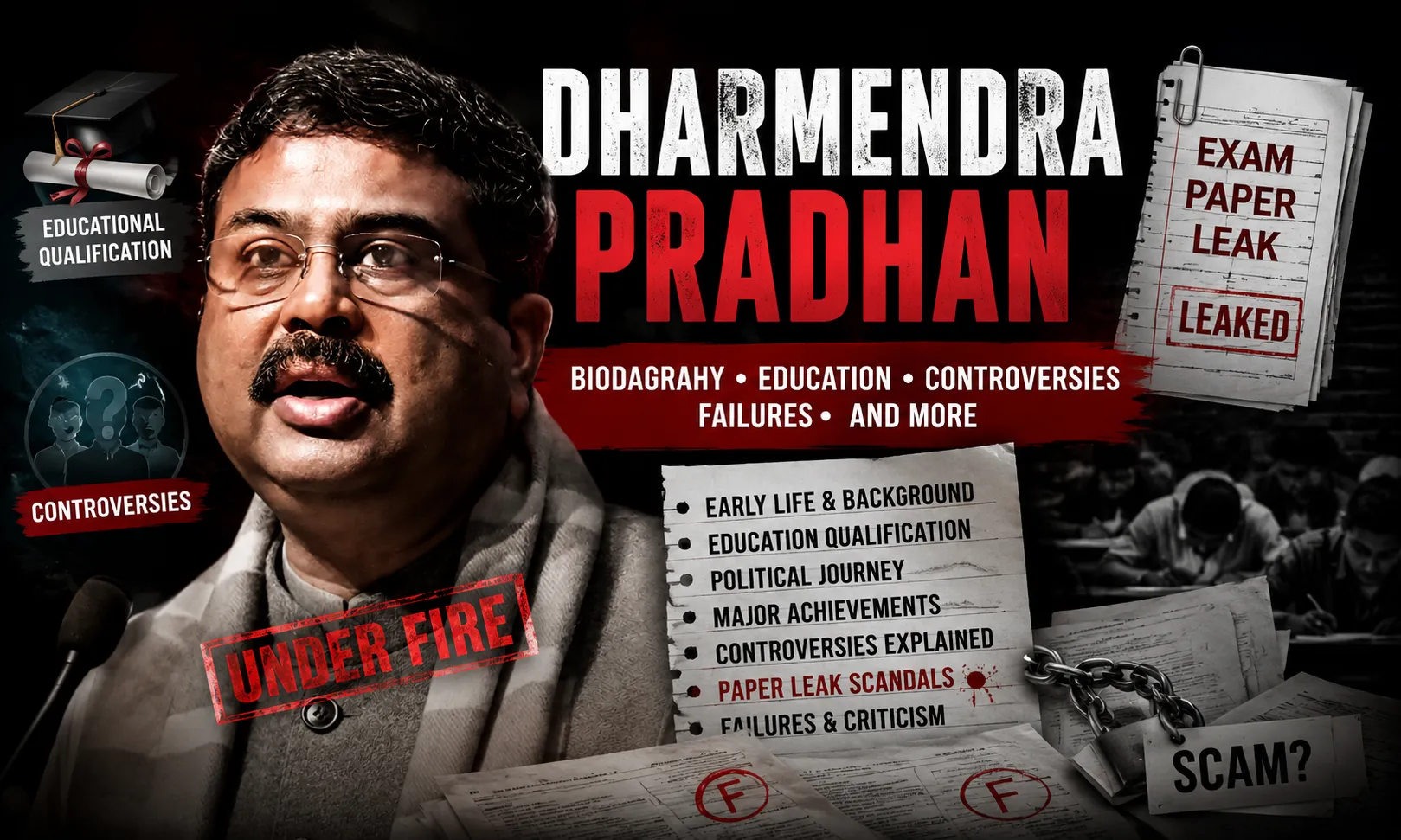
Dharmendra Pradhan is one of the most influential leaders in contemporary Indian politics. Known for his long association with the Bharatiya Janata Party (BJP), he has held several important positions in the Union Government, including Minister of Petroleum and Natural Gas, Minister of Skill Development and Entrepreneurship, and currently Union Minister of Education.
Over the last two decades, Pradhan has emerged as a prominent political figure, particularly in Odisha and at the national level. His rise from student politics to the Union Cabinet reflects a journey marked by organisational work, electoral politics, and ministerial responsibilities. While supporters credit him for his role in expanding the BJP's presence in eastern India and implementing key policy initiatives, critics have questioned aspects of his ministerial tenure and handling of certain public issues.
This article explores Dharmendra Pradhan's early life, family background, education, political career, achievements, controversies, and current role in Indian politics.
Advertisement
Who is Dharmendra Pradhan?
Dharmendra Pradhan was born on 26 June 1969 in Talcher, located in the Angul district of Odisha. He was born into a politically active family that played an important role in shaping his future career.
Growing up in Talcher exposed him to the social and economic realities of an industrial region known for coal mining, energy production, and heavy industry. These experiences would later influence many of his political perspectives regarding development, energy security, and economic growth.
Family Background and Political Influence
One of the biggest influences in Dharmendra Pradhan's life was his father, Debendra Pradhan, a veteran BJP leader and former Union Minister.
Advertisement
Debendra Pradhan was among the prominent BJP leaders from Odisha during a period when the party was still expanding its organisational base across the country. His political career provided young Dharmendra with firsthand exposure to election campaigns, party organisation, and public service.
Unlike many politicians who enter politics after establishing careers in other professions, Dharmendra Pradhan grew up in an environment where politics and public affairs were a regular part of daily life.
What Is Dharmendra Pradhan's Educational Qualification?
Dharmendra Pradhan completed his higher education in Odisha and holds a Master of Arts (M.A.) in Anthropology from Utkal University. His educational background is often highlighted because anthropology focuses on understanding human societies, cultures, and social structures, subjects that are closely related to governance and public policy.
Advertisement
According to official parliamentary records, Pradhan pursued his studies before becoming actively involved in student politics, which later became the foundation of his political career.
Studying at Utkal University
Utkal University is one of Odisha's oldest and most respected educational institutions. During his time there, Pradhan was exposed to academic discussions, student activism, and public affairs, all of which helped shape his political thinking.
Interest in Student Politics
While pursuing higher education, Pradhan became associated with the Akhil Bharatiya Vidyarthi Parishad (ABVP). Through student politics, he gained experience in leadership, public speaking, and organisational work.
Advertisement
How Education Influenced His Career
His academic background and involvement in student organisations helped him develop skills that later proved valuable in mainstream politics. The combination of education and grassroots activism became an important stepping stone in his rise within the Bharatiya Janata Party.
Dharmendra Pradhan Controversies and Criticism
Like many senior politicians, Dharmendra Pradhan's career has faced criticism and controversies, particularly during his tenure as Union Education Minister. Most of the criticism has centred around examination management, the National Testing Agency (NTA), and allegations of paper leaks in major national examinations.
NEET 2024 Controversy
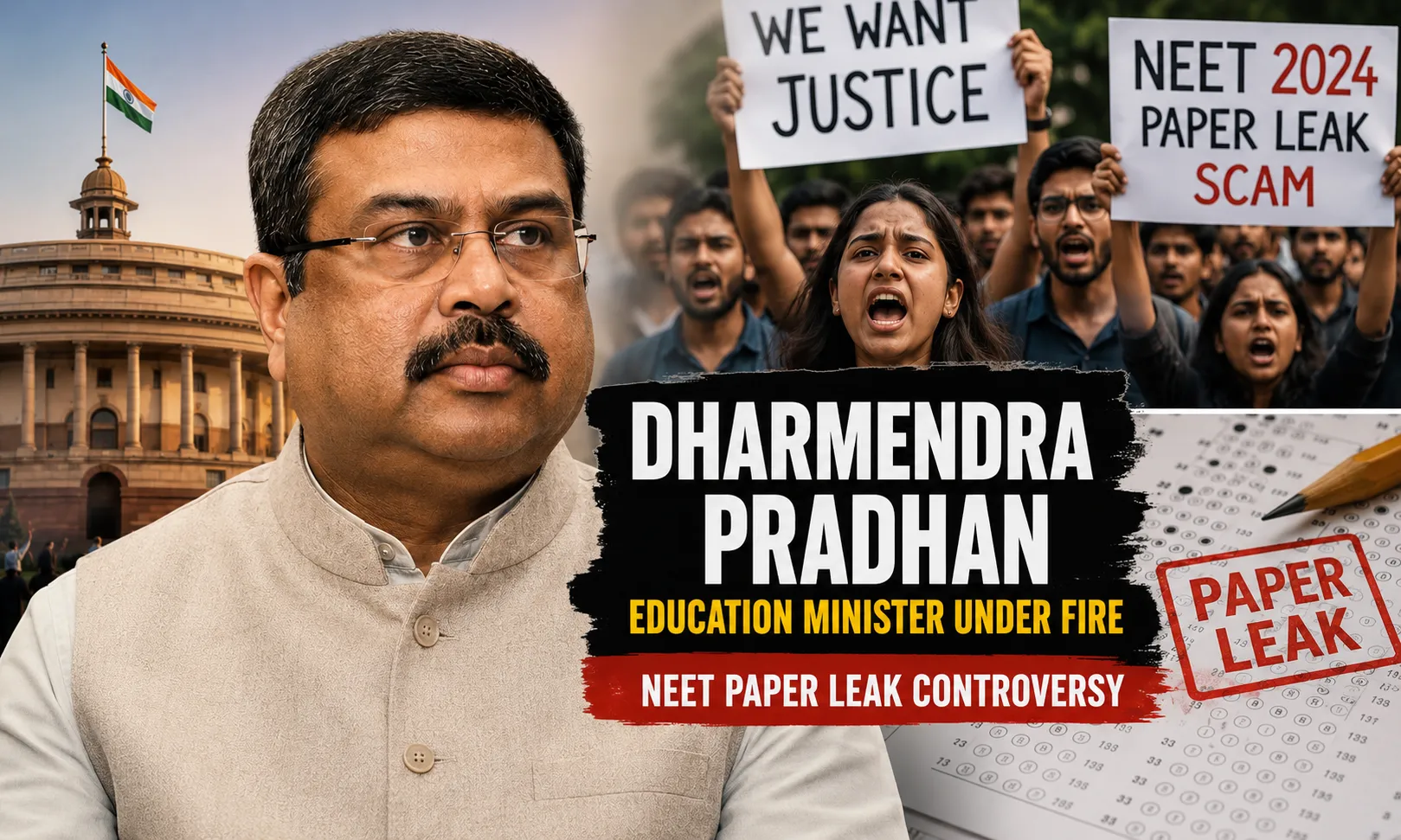
One of the biggest controversies during Pradhan's tenure emerged after the NEET-UG 2024 examination. Allegations of question paper leaks, irregularities in results, and concerns over grace marks sparked nationwide protests. The issue eventually reached the Supreme Court and became one of the most discussed education controversies in recent years.
Advertisement
Investigations led to multiple arrests in connection with the paper leak case, and the matter was handed over to the CBI. However, the Supreme Court later stated that there was no evidence of a widespread systemic leak that would justify cancelling the entire examination. Critics nevertheless questioned the functioning of the NTA and the Ministry of Education. Sources: NEET 2024 controversy records and Supreme Court proceedings.
UGC-NET 2024 Cancellation
In June 2024, the UGC-NET examination was cancelled after inputs suggested that the integrity of the exam may have been compromised. The cancellation triggered criticism from students and opposition parties, who argued that repeated examination issues were damaging trust in India's testing system.
Following the incident, the government announced reviews and reforms aimed at improving examination security and the functioning of the NTA.
Advertisement
NEET-UG 2026 Paper Leak Crisis
In 2026, another major controversy emerged after allegations of a NEET-UG paper leak. The government acknowledged a breach and announced that future NEET examinations would move toward a computer-based format to improve security. The incident led to renewed criticism of the NTA and questions about why several recommended reforms had not yet been fully implemented.
Opposition Demands for Resignation
Several opposition parties, student groups, and activists have demanded Dharmendra Pradhan's resignation following examination controversies. Critics argue that recurring issues indicate failures in examination administration, while supporters contend that many of these problems are systemic and involve multiple agencies beyond the Education Minister alone.
Public Debate Over Education Administration
The examination controversies have significantly influenced public perception of Pradhan's tenure as Education Minister. While supporters point to initiatives such as the implementation of the National Education Policy (NEP), critics argue that examination security and testing reforms remain major challenges that continue to affect millions of students across India.
Advertisement
Conclusion: Accountability Must Come Before Politics
Dharmendra Pradhan's journey from student politics in Odisha to becoming India's Education Minister is undoubtedly remarkable. Over the years, he has held several important positions in the Union Government and has played a role in shaping national policies.
However, a minister's legacy is not determined only by achievements. It is also judged by how effectively they handle crises under their responsibility.
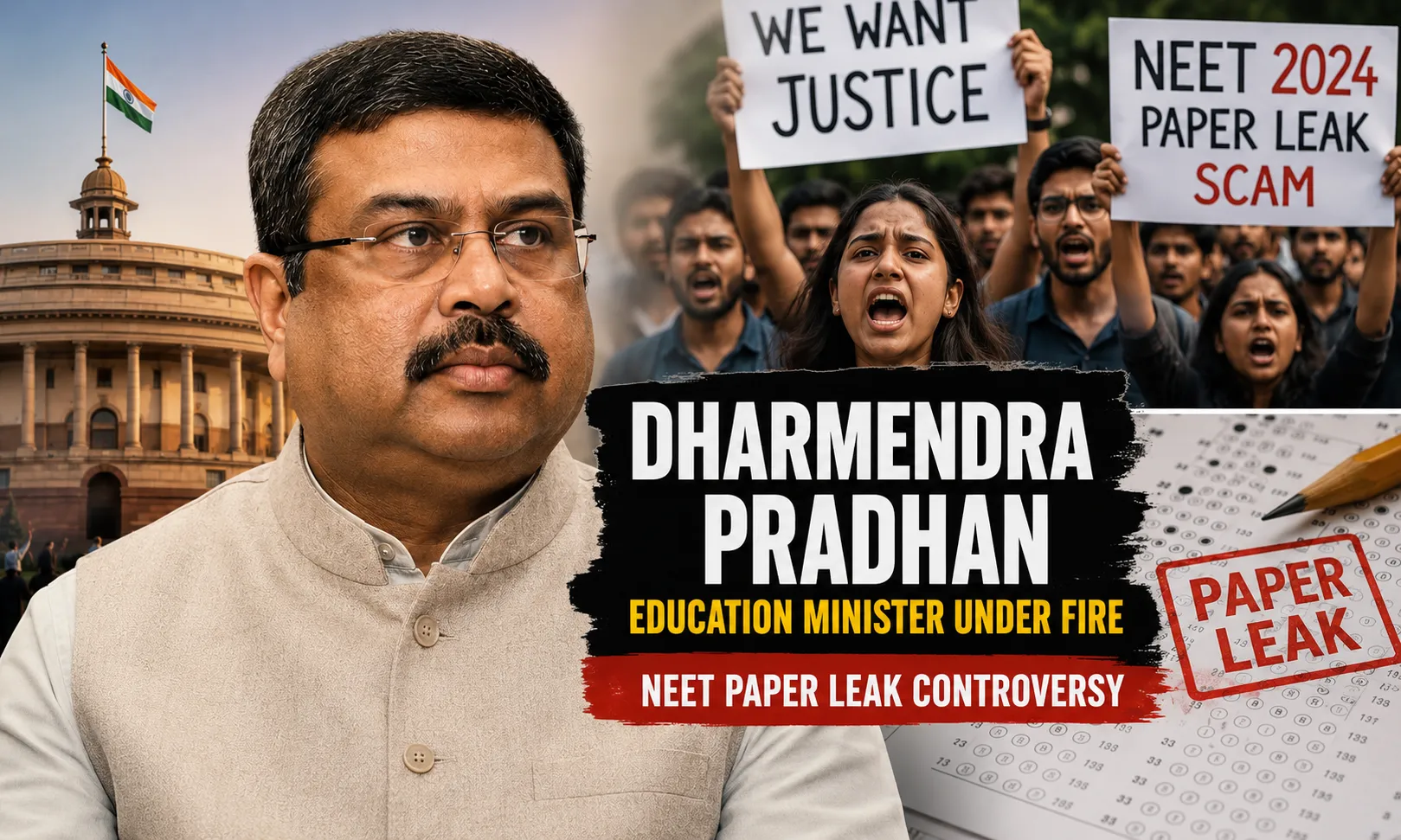
The repeated controversies surrounding national examinations, including NEET and UGC-NET, have raised serious concerns among students, parents, and educators. Whether these failures originate from the National Testing Agency, administrative shortcomings, or deeper systemic issues, millions of students ultimately bear the consequences.
Advertisement
For many students, an examination is not just a test; it is a gateway to their future. When questions are raised about exam integrity, transparency, or security, confidence in the education system suffers. The impact extends beyond individual students and affects trust in the institutions responsible for shaping India's future workforce.
Critics argue that repeated examination controversies reflect a failure of oversight and accountability. Supporters, on the other hand, contend that the government has taken steps to investigate irregularities and introduce reforms.
Regardless of political viewpoints, one fact remains clear: India's education system cannot afford recurring examination controversies. Students deserve a system that is secure, transparent, and trustworthy.
Advertisement
As Education Minister, Dharmendra Pradhan carries significant responsibility for maintaining public confidence in that system. If the government is unable to consistently prevent major examination controversies, calls for greater accountability will likely continue.
Ultimately, the debate is not only about one politician. It is about protecting the future of millions of students whose careers and opportunities depend on the credibility of India's examination system.